Quick Answer: Banging or knocking pipes when your boiler runs almost always come down to one of three causes: trapped air, mineral scale buildup on the heat exchanger, or a pressure surge called water hammer. Trapped air produces a hollow, repeating bang as bubbles collapse inside the pipes, and it usually clears up once you bleed the radiators. Mineral scale creates a rumbling, kettle sound known as kettling, caused by hard water minerals restricting flow inside the heat exchanger until pockets of water flash into steam. Water hammer is a sharp, single knock that happens when a valve snaps shut fast enough to send a shockwave through the system. Boiler loop water typically runs around 158°F, well below the 212°F point where water actually boils, so a rumble that sounds like boiling water means something is restricting flow. Listening for when the noise happens, at startup, mid cycle, or shutoff, tells you which of the three you're dealing with.
The radiators kick on around eight o'clock, right after the sun drops behind the trees on a January evening in Macomb County, and that's when you hear it. A hollow clank from somewhere behind the drywall near the stairs, followed by a string of softer ticks as the pipes settle. You mute the television and wait. A minute later it happens again, quieter this time, and then the house goes back to its usual quiet hum of moving water and warm air.
If you've stood in a hallway listening to your own heating system talk to you, you know how it feels. Not quite alarming, but not something you can ignore either. Boiler pipe noise almost never shows up for no reason. Something changed inside the system, and the sound is the system telling you what.
Most homeowners lump every pipe noise together as "the pipes are old" or "boilers just do that." They're not the same thing at all. A bang that happens once when the burner fires is a different animal than a rumble that builds for twenty minutes, and neither one has much in common with a steady tick, tick, tick that follows the pipe run through the basement ceiling. Knowing which sound you're actually hearing keeps you from either ignoring a real problem or panicking over a harmless one.
WARNING: If you smell gas, see soot near the burner, or your carbon monoxide alarm sounds, stop, leave the house, and call for emergency service. A cracked heat exchanger or bad combustion can push carbon monoxide into your living space.
TIP: Photograph the pressure gauge and any leak before touching anything. That one image often tells us whether you have a quick fix or a failing body, and it can save a return trip.
The Three Things Actually Causing That Noise
Peel back the noise and you're almost always looking at trapped air, mineral scale on the heat exchanger, or a pressure surge called water hammer. There's a fourth possibility too, pipes physically knocking against wood framing as they expand, but that one behaves differently enough that it's easy to rule in or out on its own.
Trapped air sounds hollow and tends to repeat as bubbles move through the system and collapse.
Mineral scale, also called kettling, builds slowly and sounds more like a kettle coming to a boil than a knock.
Water hammer is sharp and sudden, a single loud bang tied to a valve closing rather than to the boiler's burner cycle. Each one has its own fix, and none of them require you to guess.
WARNING: If you smell gas, see soot near the burner, or your carbon monoxide alarm sounds, stop, leave the house, and call for emergency service. A cracked heat exchanger or bad combustion can push carbon monoxide into your living space.
TIP: Photograph the pressure gauge and any leak before touching anything. That one image often tells us whether you have a quick fix or a failing body, and it can save a return trip.
Trapped Air: The Hollow Bang That Usually Clears With Bleeding
Air gets into a hydronic system more often than most people expect. It rides in with fresh water added during a repair, sneaks in through a loose fitting, or comes out of solution as water heats and cools repeatedly over a heating season. Once it's in the pipes, it travels with the water, and every time a bubble passes through a narrow section of pipe or gets pushed into a radiator, it collapses. That collapse is what you're hearing: a hollow clunk, or a series of them, usually right after the circulator pump kicks on.
What it sounds like. Repeating, hollow, and often loudest from a single radiator rather than the pipes themselves.
Why it happens. Air is compressible and water isn't, so wherever air pockets sit, water flow turns turbulent instead of smooth.
How to clear it. Bleeding a radiator means opening the small valve near the top, usually with a radiator key or flathead screwdriver, until water starts trickling out in a steady stream instead of hissing air. Close it the moment water appears, one radiator at a time, starting with whichever floor sits lowest in the house. Most systems need this once a year. Systems that recently had repair work done, opening up the loop somewhere, often need it more.
If bleeding one radiator doesn't quiet things down, work through the rest of them. A system with air in more than one radiator can take a few passes over a couple of days, since trapped pockets shift as pressure changes throughout the house.
TIP: Photograph the pressure gauge and any leak before touching anything. That one image often tells us whether you have a quick fix or a failing body, and it can save a return trip.
Kettling: When Mineral Scale Turns a Boiler Into a Teakettle
This is the one that sounds the most alarming, and for good reason. Boiler loop water isn't supposed to boil. It circulates through the heat exchanger at somewhere around 158°F, far short of the 212°F it would take to actually turn to steam. When everything works the way it should, that water moves fast enough over the burner that it never lingers long enough to get anywhere near boiling.
Mineral scale changes that. In homes on hard water, and a good stretch of Macomb and Oakland Counties qualifies, dissolved minerals precipitate out of the water and coat the inside of the heat exchanger over months and years. That coating narrows the channels the water flows through and roughens the surface, slowing the flow and making it more turbulent. Iron oxide sludge, sometimes called magnetite, does something similar as it wears off the inside of radiators and settles wherever flow is weakest.
Slow the flow enough and water sitting right against the hottest part of the heat exchanger can flash into small pockets of steam before it gets pushed along. Those pockets collapse violently against the surrounding water, producing the rumbling, popping sound, sometimes rising to something people compare to a distant airplane, that gives kettling its name. The word itself comes from exactly what it sounds like: a kettle just before it starts to whistle.
WARNING: Kettling that gets ignored for months tends to get worse, not better, and repeated overheating in one localized spot can eventually crack the heat exchanger. A cracked exchanger is a leak point, and depending on the boiler type, it can also let combustion gases mix with the heating loop. Don't wait out a rumbling boiler hoping it resolves on its own.
A technician dealing with kettling typically starts by checking whether the buildup is limescale, sludge, or both, since the fix differs. Limescale usually calls for descaling the heat exchanger or, in cases where buildup has gone on for years, replacing it outright. Sludge responds better to a system flush, sometimes paired with a chemical inhibitor added to the loop water to slow future buildup, and a magnetic filter installed on the return line to catch iron particles before they recoat the exchanger.
WARNING: If you smell gas, see soot near the burner, or your carbon monoxide alarm sounds, stop, leave the house, and call for emergency service. A cracked heat exchanger or bad combustion can push carbon monoxide into your living space.
TIP: Photograph the pressure gauge and any leak before touching anything. That one image often tells us whether you have a quick fix or a failing body, and it can save a return trip.
Water Hammer: The Sharp, Single Knock
Water hammer feels different from the moment you hear it. Instead of a repeating clunk or a building rumble, it's one loud bang, sometimes loud enough to feel through the floor, tied to a valve closing rather than to the burner cycling on. Zone valves, which open and close to route hot water to different parts of a house, are common culprits. Water moving through a pipe carries real momentum, and when a valve snaps shut fast enough, that moving water has nowhere to go. The shock travels back through the pipe as a pressure wave, and the pipe absorbs the impact by jumping against whatever it's fastened to.
Plumbers have dealt with this problem for well over a century. Nineteenth century municipal water systems used tall open standpipes to absorb pressure surges from piston pumps, and that same idea shrunk down into the water hammer arrestors used in homes today. A modern arrestor is a small sealed chamber, usually with a cushion of air or gas separated from the water by a piston or diaphragm. When a surge hits, the cushion compresses and absorbs the energy instead of letting it slam through rigid pipe. Older arrestors can lose that air cushion over the years and stop doing their job, which is often why a system that stayed quiet for a decade suddenly starts banging again.
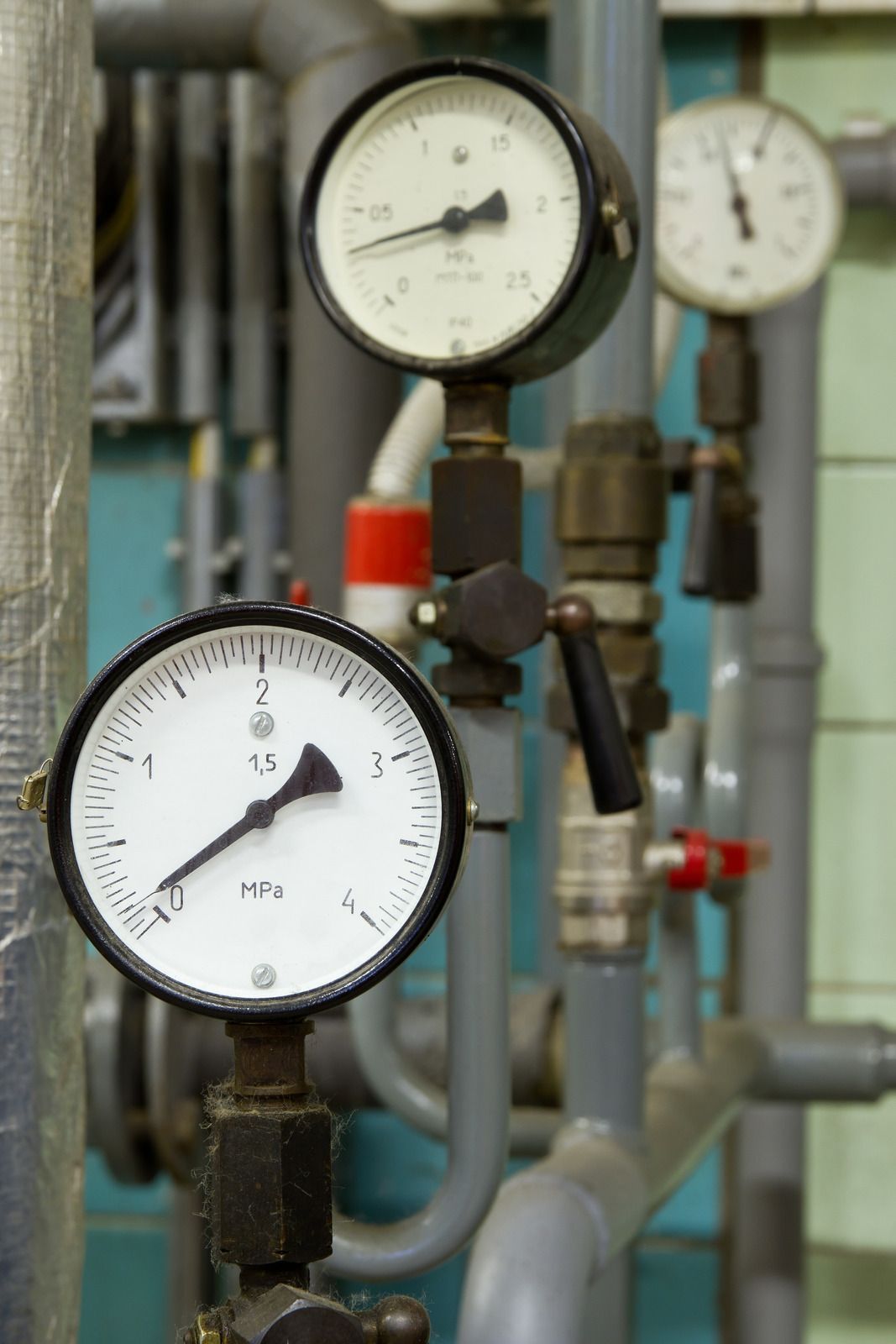
System pressure plays a role too. Most residential hydronic systems are designed to run somewhere around 12 to 15 psi when cold. Pressure that has crept above or below that range changes how forcefully water moves through the loop and how a closing valve reacts, and a pressure gauge on the boiler itself will tell you where things stand in about ten seconds.
Pipe Expansion: When It's Not the Water at All
Not every knock has anything to do with air, minerals, or pressure. Copper and steel pipe both expand slightly as hot water moves through them and contract again as they cool. That's completely normal. The trouble starts when a pipe run passes through a joist, stud, or subfloor without room to move. Every time the system heats up or shuts off, the pipe slides against the wood by a fraction of an inch, and that friction produces a tick, tick, tick, or in worse cases, a distinct pop.
This kind of noise tends to follow a predictable pattern. It shows up at the start of a heating cycle, sometimes again at the end, and it stays consistent from one cycle to the next rather than random. You can often trace it by walking the length of exposed pipe in a basement or crawlspace and listening at each spot where it crosses a joist.
Foam sleeves slipped over the pipe where it passes through framing give it room to expand without touching the wood directly.
Cushioned hangers do the same job for pipe runs that aren't touching framing but are clamped too tightly to a joist. Neither fix requires cutting into a wall, which makes this one of the easier noises to chase down once you know what you're listening for.
TIP: If the ticking only happens along one specific run of pipe, mark the spot with tape before calling anyone out. It saves a technician from having to trace the whole system from scratch and usually gets the fix done faster.
WARNING: If you smell gas, see soot near the burner, or your carbon monoxide alarm sounds, stop, leave the house, and call for emergency service. A cracked heat exchanger or bad combustion can push carbon monoxide into your living space.
TIP: Photograph the pressure gauge and any leak before touching anything. That one image often tells us whether you have a quick fix or a failing body, and it can save a return trip.
Reading the Pattern: A Quick Way to Tell Which One You Have
Timing tells you almost everything before a technician ever shows up.
Right when the burner fires, then quiet. That's usually expansion, pipe against framing settling into its new, warmer length.
A hollow clunk from one radiator, repeating for a few minutes. Trapped air, and bleeding that radiator is worth trying before anything else.
A rumble or whistle that's gotten louder over the past few weeks or months. Kettling, and it's worth having someone look at the heat exchanger sooner rather than later.
One sharp bang, tied to a zone valve or faucet closing rather than the boiler cycle. Water hammer, likely from a worn or missing arrestor.
None of these four require opening up walls or taking anything apart just to figure out what's going on. A few evenings of paying attention to when the sound happens and where it seems to come from usually points to the answer before a service call ever gets scheduled.
Frequently Asked Questions
Why does my boiler make a loud bang only when it first turns on?
A single bang right at startup is usually just pipe expansion against a joist or stud, not a fault, and it stops within seconds. Repeated bangs during that same startup point to trapped air instead.
Is it safe to keep running a boiler that sounds like a kettle?
It's usually safe in the short term, but it shouldn't be ignored. Kettling means water briefly flashes into steam inside the heat exchanger, stressing metal not built for it. Prolonged stress can eventually crack it.
Can I bleed my own radiators, or does that need a technician?
Bleeding a radiator is a fix most homeowners can safely handle, using a radiator key or flathead screwdriver and small container for drips. If it doesn't quiet things after a couple tries, call a pro.
Why do my pipes still knock even after I've bled every radiator?
If bleeding didn't help, it's probably not trapped air at all. A rumble building over time points to mineral scale, a single sharp bang points to water hammer, and steady ticking points to pipe expansion.
Does low system pressure cause pipes to bang?
Indirectly, yes. Low pressure lets more air enter the system and makes the circulator pump work harder, raising the odds of trapped air or turbulence noise. Checking the pressure gauge takes seconds, ruling it out.
How often should a boiler be flushed to prevent kettling?
Most technicians recommend an annual inspection and flush, timed before heating season, especially where hard water is common. Homes with hard water may need it more often. Waiting until kettling is loud means buildup accumulated.
WARNING: If you smell gas, see soot near the burner, or your carbon monoxide alarm sounds, stop, leave the house, and call for emergency service. A cracked heat exchanger or bad combustion can push carbon monoxide into your living space.
TIP: Photograph the pressure gauge and any leak before touching anything. That one image often tells us whether you have a quick fix or a failing body, and it can save a return trip.
A Quiet Boiler Means Everything Is Working
Every clunk, rumble, and tick traced here points back to something specific: a pocket of air working loose, scale narrowing a passage it shouldn't, or a valve closing faster than the pipe behind it expected. None of it is random, and none of it means living with a boiler that talks back every evening. Once the real cause is identified, the noise has a clear reason to stop, and the house goes back to running the way it was built to.
North Wind Heating & Air Conditioning, Inc
has spent 35+ years working on
boilers and hydronic systems
throughout Clinton Township, MI, and the surrounding communities that deal with the same hard water and cold winters described here. That kind of experience means spotting the difference between a noise that clears up in an afternoon and one that points to a bigger issue, before either one gets the chance to turn into a larger repair or a system failure.